

Award-winning ICT Research
SnT is an internationally leading research and innovation centre founded in 2009 within the University. We work with private and public partners to establish Luxembourg as a European centre of excellence for secure, reliable, and trustworthy ICT systems and services. In this context, SnT achieves excellence by targeting research topics that create high impact, well beyond the academic community.
National Centre
of Excellence in
FinTech
Discover our Research Areas
SnT conducts award-winning research in four priority areas
Cybersecurity
We develop interdisciplinary solutions across multiple domains to ensure secure and resilient operations and communications. From critical information infrastructures and post-quantum cryptography, to deepfake detection software and sociotechnical cybersecurity, our researchers are always working on solutions to prevent and neutralise attacks.
FinTech
Compliant, secure, and trustworthy ICT solutions constitute the core of financial, legal, and insurance sectors. We conduct research in cybersecurity, infrastructures, blockchain, artificial intelligence, machine learning and many other domains in FinTech to develop the financial tools of tomorrow.
IoT & Autonomous Vehicles
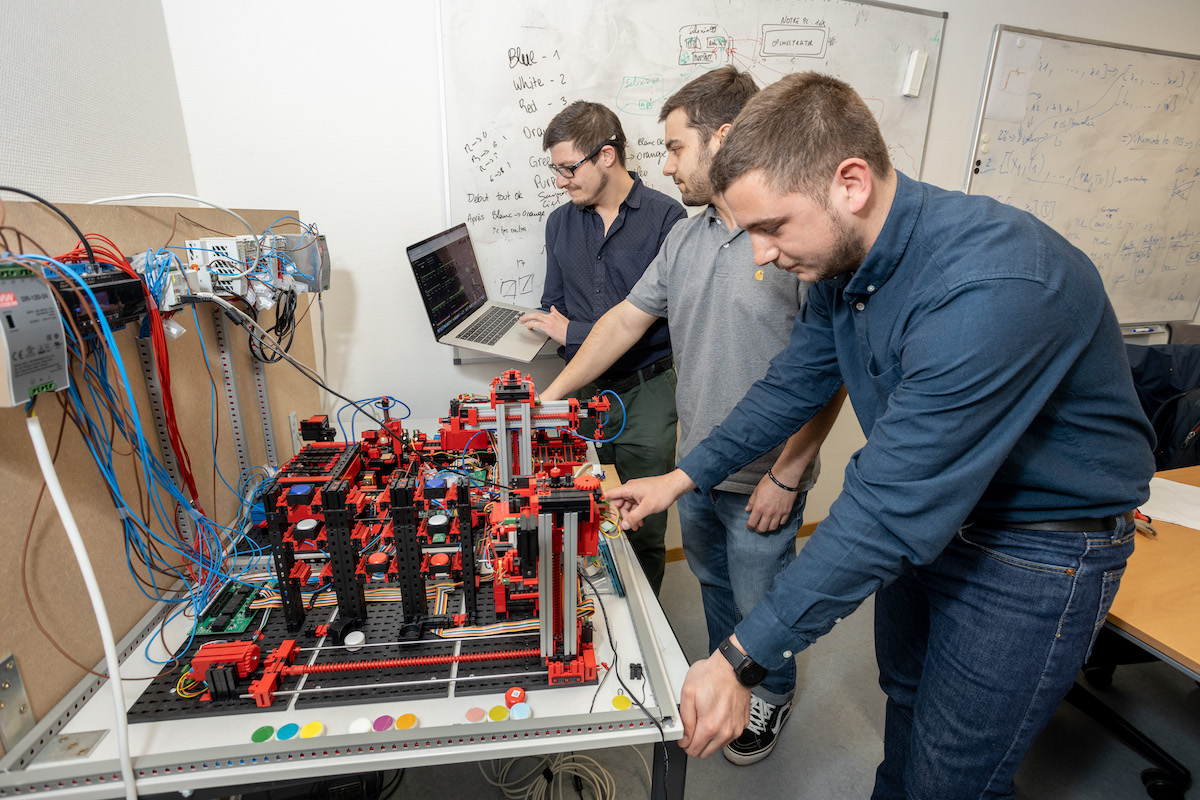
The internet of things (IoT) and autonomous cars, robots, and drones are changing the way we optimise industrial production and experience everyday life. Our researchers are building efficient, secure and safe solutions for connected systems within the domains of Industry 4.0, autonomous mobility, smart grids, cities, and homes to allow them to reach their full potential.
Space Systems
Space exploration and the Earth-orbit space economy are creating entirely new markets. Our expertise in satellite communications, autonomous systems, orbital and planetary robotics, small satellites, space systems design and mission-critical software makes us the ideal center of excellence to support Luxembourg’s commitment to space exploration and in-situ resource utilization (ISRU).
Our Research Groups
- Applied Security and Information Assurance Group (APSIA)
- Services and Data Management (SEDAN)
- Automation & Robotics (ARG)
- Security Design and Validation (SerVal)
- Critical and Extreme Security and Dependability (CritiX)
- Signal Processing and Communications (SIGCOM)
- CryptoLUX
- Space Robotics (SpaceR)
- Computer Vision, Imaging and Machine Intelligence (CVI2)
- Signal Processing Applications in Radar and Communications (SPARC)
- Entrepreneurship, Innovation and New Technology Research Group (EINT)
- Space Systems Engineering (SpaSys)
- Digital Financial Services and Cross-Organisational Digital Transformations (FINATRAX)
- Trustworthy Software (TruX)
- Sociotechnical Cybersecurity (IRiSC)
- Software Verification and Validation (SVV)
- Parallel Computing & Optimisation (PCOG)
- Ubiquitous and Intelligent Systems (UBIX)